
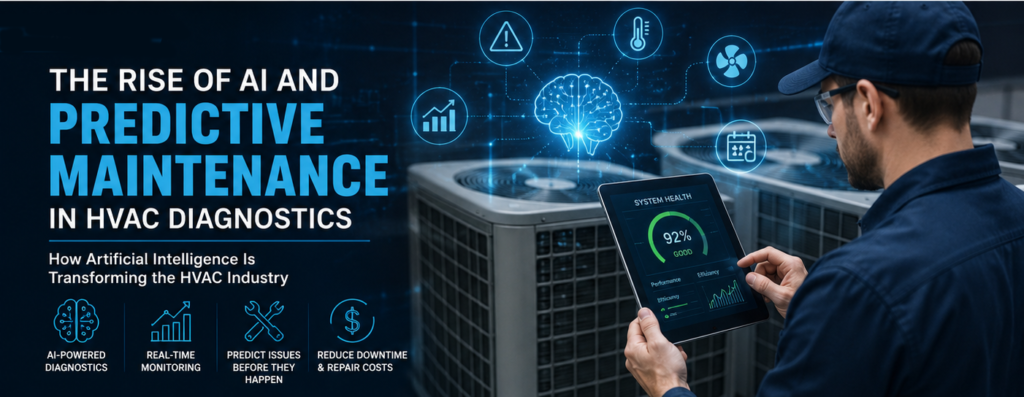
How Artificial Intelligence Is Transforming the HVAC Industry
The HVAC industry is entering a new era driven by artificial intelligence, automation, and data analytics. Traditional maintenance models that relied on reactive repairs are rapidly being replaced by predictive maintenance systems powered by AI technology.
For HVAC technicians, this transformation is changing how systems are diagnosed, serviced, and monitored. Understanding AI-driven HVAC diagnostics is becoming an essential skill for technicians who want to remain competitive in the evolving HVAC landscape.
What Is Predictive Maintenance in HVAC?
Predictive maintenance uses real-time system data, sensors, and artificial intelligence to detect performance issues before equipment failure occurs.
Instead of waiting for a breakdown, predictive maintenance systems analyze:
- Temperature fluctuations
- Refrigerant pressures
- Airflow performance
- Compressor runtime
- Energy consumption
- Equipment vibration patterns
This data allows HVAC systems to identify warning signs early, helping technicians address problems before they become costly repairs.
How AI Is Changing HVAC Diagnostics
Artificial intelligence enhances HVAC diagnostics by identifying patterns and abnormalities that may go unnoticed during traditional inspections.
AI-Powered HVAC Systems Can:
- Detect refrigerant leaks early
- Predict compressor failures
- Identify airflow restrictions
- Monitor system efficiency continuously
- Recommend preventive maintenance schedules
Rather than relying solely on manual troubleshooting, technicians can now use data-driven insights to diagnose systems more accurately and efficiently.
Benefits of Predictive Maintenance for HVAC Systems
Reduced Equipment Downtime
Predictive maintenance minimizes unexpected system failures by identifying problems before breakdowns occur.
Lower Repair Costs
Catching issues early often prevents major component damage, reducing expensive emergency repairs.
Improved Energy Efficiency
AI systems monitor performance continuously, helping systems operate at peak efficiency.
Extended Equipment Lifespan
Preventive repairs reduce stress on HVAC equipment, increasing operational longevity.
Better Customer Satisfaction
Fewer breakdowns mean improved comfort and trust from customers.
For HVAC companies, predictive maintenance creates recurring service opportunities while improving client retention.
The Role of Smart Sensors in Modern HVAC Systems
AI-driven HVAC diagnostics depend heavily on smart sensors.
Common HVAC Sensors Include:
- Temperature sensors
- Pressure sensors
- Humidity sensors
- Air quality monitors
- Vibration sensors
These devices collect operational data in real time and communicate with connected control systems.
When abnormal readings occur, technicians receive alerts before the issue escalates into system failure.
Remote Monitoring Is Changing HVAC Service Calls
Remote monitoring technology is transforming how HVAC service is delivered.
Benefits of Remote Monitoring:
- Diagnose issues before arriving onsite
- Reduce unnecessary service calls
- Improve technician efficiency
- Monitor commercial buildings remotely
- Provide proactive customer support
Technicians can now access system performance data from smartphones, tablets, or cloud-based software platforms.
This shift is making HVAC service faster, smarter, and more efficient.
Common Challenges with AI HVAC Technology
While AI technology offers major benefits, technicians must understand the challenges involved.
Common Issues Include:
- Connectivity problems
- Sensor calibration errors
- Software integration complications
- Data interpretation mistakes
- Cybersecurity concerns
Technicians who understand both HVAC mechanics and digital systems will have a significant advantage.
Why HVAC Technicians Must Adapt
AI is not replacing HVAC technicians—it is enhancing their capabilities.
However, technicians who refuse to adapt to technology risk falling behind. Modern HVAC careers increasingly require knowledge of:
- Smart controls
- Connected HVAC systems
- Data interpretation
- Remote diagnostics
- Software-based troubleshooting
The future technician must combine mechanical expertise with technological proficiency.
HVAC Training for the Future
Training programs must evolve to include:
- AI-based diagnostic tools
- Smart thermostat integration
- Predictive maintenance software
- Advanced troubleshooting labs
- Real-world system simulations
Hands-on experience with modern equipment is essential for preparing students for the next generation of HVAC systems.
The Future of HVAC Is Data-Driven
Artificial intelligence and predictive maintenance are redefining HVAC service. Systems are becoming smarter, diagnostics are becoming faster, and maintenance is becoming more proactive.
Technicians who embrace these advancements will position themselves at the forefront of the industry.
Train for the Future at NARS HVAC School
At NARS Training HVAC School, students gain hands-on experience with modern HVAC systems, advanced diagnostics, and emerging technologies shaping the future of the industry.
👉 Explore our HVAC training programs today:
https://narshvacschool.com